Comparative Analysis of Probability Changes in Bingo Number Draws and Poker Betting Sequences on Regulated Online Sites
Sam Powell · Oct 30, 2026
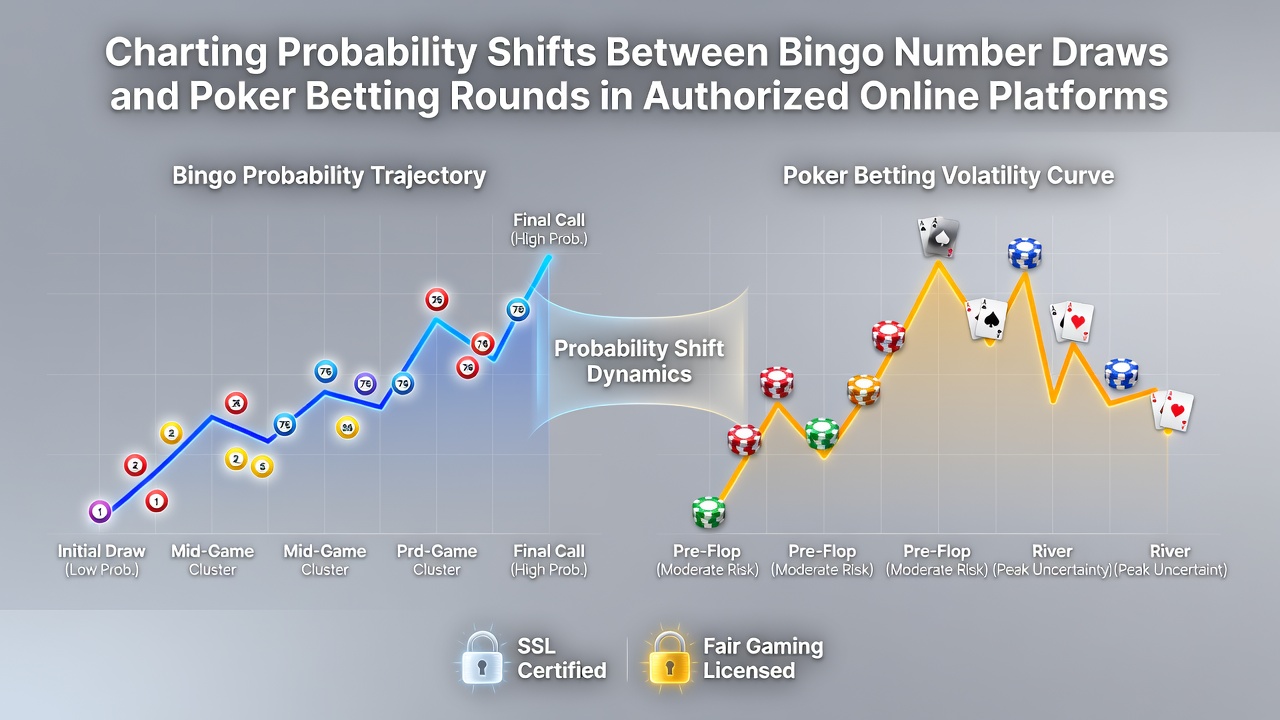
Comparative Analysis of Probability Changes in Bingo Number Draws and Poker Betting Sequences on Regulated Online Sites
Authorized online platforms manage bingo number draws and poker betting rounds through certified random number generators that undergo regular audits by bodies such as the Nevada Gaming Control Board and the Malta Gaming Authority, and these systems produce sequences where probability distributions evolve differently across each game type. Bingo draws operate on a fixed pool of numbers with each selection removing one option from the remaining set, which alters subsequent probabilities in a straightforward manner, whereas poker betting rounds incorporate community cards and player actions that create conditional probabilities dependent on prior revelations and decisions.
Mechanics of Probability Evolution in Bingo Draws
Bingo platforms generate calls from a 75-ball or 90-ball set using algorithms that ensure uniform distribution at the outset, yet after each number appears the remaining pool shrinks and the likelihood of any specific undrawn number rises proportionally according to the initial set size. Researchers at institutions tracking digital gaming note that this linear depletion allows players to calculate exact odds for completing patterns such as lines or full houses once several numbers have been revealed, and data from licensed operators shows that these calculations remain independent of previous rounds because each game resets its pool entirely. Platforms display real-time remaining counts to users, which supports immediate probability assessments without requiring external tools.
Conditional Shifts During Poker Betting Rounds
Poker sequences on the same platforms begin with a shuffled 52-card deck where initial hole card probabilities sit at standard levels, but the first betting round introduces community cards that narrow the space of possible hands and force recalculation of outs and pot odds. Subsequent rounds add further cards while player folds and raises provide additional information that modifies implied probabilities for remaining participants, and studies from Canadian regulatory reviews indicate that these layered dependencies distinguish poker from bingo because each revealed element carries information about the deck composition rather than simple removal from a numbered grid. Licensed sites employ certified shuffle protocols that prevent any carryover between hands, maintaining independence across separate rounds while allowing within-hand probability updates.
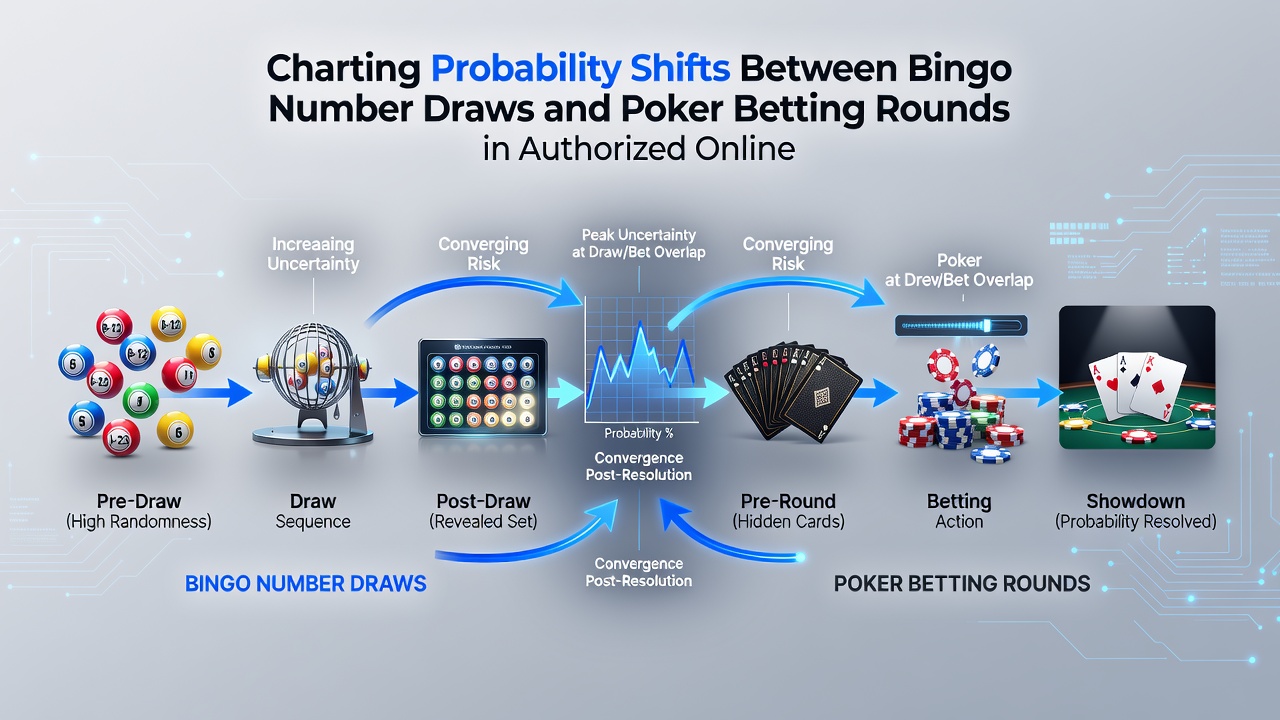
Platform Tools for Tracking Cross-Game Probability Data
Regulated operators integrate dashboards that log draw sequences from bingo alongside hand histories from poker tables, and these records enable statistical analysis of frequency patterns over thousands of rounds without implying predictive power for future outcomes. In October 2026 several platforms updated their analytics suites to include side-by-side visualizations of number depletion curves and card distribution heat maps, following guidelines issued by the Australian Communications and Media Authority on transparency in probability presentation. Users access these overlays through account settings where aggregated data from verified sessions appears, and industry reports confirm that such features help illustrate how bingo probabilities tighten uniformly while poker odds branch based on branching decision trees.
Regulatory Standards Governing Randomness and Fairness
Authorized platforms must submit RNG outputs to third-party testing labs that verify compliance with standards set by regional authorities, and this process covers both the uniform selection in bingo and the combinatorial shuffling required for poker variants. Evidence from European gaming association publications shows that audit frequencies increased in recent years, with operators required to demonstrate that probability calculations presented to players match actual backend distributions at every stage of a game. Cross-border operators align their systems with multiple jurisdictions, which results in consistent probability displays even when games run concurrently on the same site.
Integration of Sequence Data Across Game Types
Some licensed environments allow simultaneous sessions where bingo draws and poker rounds occur in parallel windows, and platform logs capture timestamped events that researchers use to examine timing overlaps between number calls and betting actions. Academic papers on digital randomness have examined these combined datasets to measure variance in observed versus theoretical probabilities, finding that certified systems maintain expected distributions across both formats. Observers note that the separation of game engines prevents any direct influence between a bingo draw sequence and a poker hand outcome, preserving the distinct probability structures of each.
Conclusion
Charting probability shifts between these formats on authorized platforms relies on transparent RNG certification, real-time display features, and aggregated session data that regulators review periodically. The differences in how probabilities evolve—linear depletion in bingo versus conditional branching in poker—remain fundamental to each game structure, and licensed operators present supporting information through standardized interfaces that comply with multiple regional requirements. Continued updates to analytical tools in 2026 reflect ongoing efforts to maintain clarity around these mechanics without altering the underlying randomness that defines fair play.