Distribution Patterns of Bingo Calls and Poker Cards in Verified Fair Play Gaming Systems
Greta Zimmermann · Sep 18, 2026
Distribution Patterns of Bingo Calls and Poker Cards in Verified Fair Play Gaming Systems
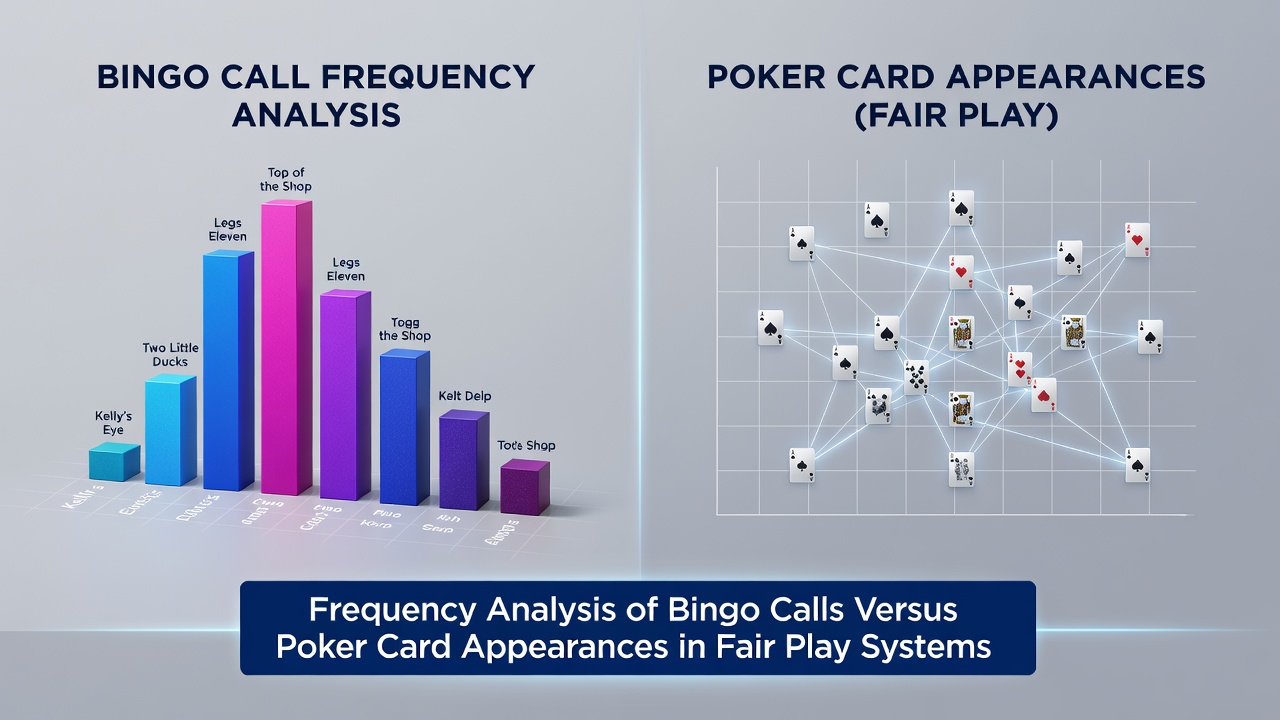
Frequency analysis serves as a core tool for verifying uniformity in both bingo number selections and poker card realizations across regulated platforms, where certified random number generators maintain consistent probabilities over extended sequences. Observers note that bingo systems typically draw from pools of 75 or 90 numbers, and each call must align with theoretical expectations of equal occurrence in long-term data sets, while poker platforms rely on 52-card decks shuffled through cryptographic algorithms that produce equivalent distribution rates for each rank and suit combination.
Bingo Number Selection Mechanics in Licensed Operations
Traditional and digital bingo environments generate calls through mechanical ball machines or electronic RNG modules that undergo periodic testing by independent laboratories, and data collected from thousands of sessions reveals how individual numbers approach a uniform frequency when sample sizes exceed several million draws. Regulatory frameworks in regions such as Nevada and Australia require operators to publish aggregate frequency reports that demonstrate deviations remain within acceptable statistical margins, while researchers track patterns across multiple variants including 75-ball and 90-ball formats to confirm no systemic bias emerges in the sequence generation process.
Studies from institutions like the University of Nevada, Reno have examined historical bingo draw logs and found that short-term fluctuations occur naturally due to the finite nature of each game round, yet cumulative records align closely with expected probabilities when aggregated across months of operation. Those who analyze these systems often compare actual call counts against binomial distribution models, which helps identify any hardware or software anomalies before they affect player outcomes.
Poker Card Appearance Rates Under Certified Shuffling Protocols
Poker platforms in fair play environments employ shuffle algorithms that rearrange the standard 52-card deck according to standards set by bodies including the Nevada Gaming Control Board and the Malta Gaming Authority, and frequency monitoring tracks how often specific cards or combinations surface during hand dealing sequences. Analysts review millions of dealt hands to verify that each individual card maintains an appearance rate near 1/52, while suit and rank distributions remain balanced across extended periods of continuous play.
Industry reports indicate that certified RNG providers subject their systems to rigorous statistical suites such as DIEHARD and NIST tests, and results from these evaluations confirm that card emergence patterns match theoretical expectations in the absence of external interference. Operators in Canadian jurisdictions publish similar verification data that covers both online and live tournament settings, allowing regulators to cross-reference appearance frequencies against benchmark models derived from combinatorial mathematics.
Comparative Metrics Across Game Categories
When researchers align bingo call frequencies with poker card appearance data, several structural differences become apparent because bingo draws occur sequentially without replacement within a single game, whereas poker shuffles reset the full deck for each hand. This distinction influences how analysts calculate variance and standard deviation, yet both categories demonstrate convergence toward uniformity once sample volumes reach sufficient scale. Data from multi-jurisdictional audits conducted through September 2026 shows that platforms maintaining dual certification for bingo and poker products achieve comparable fairness scores when measured against established benchmarks.
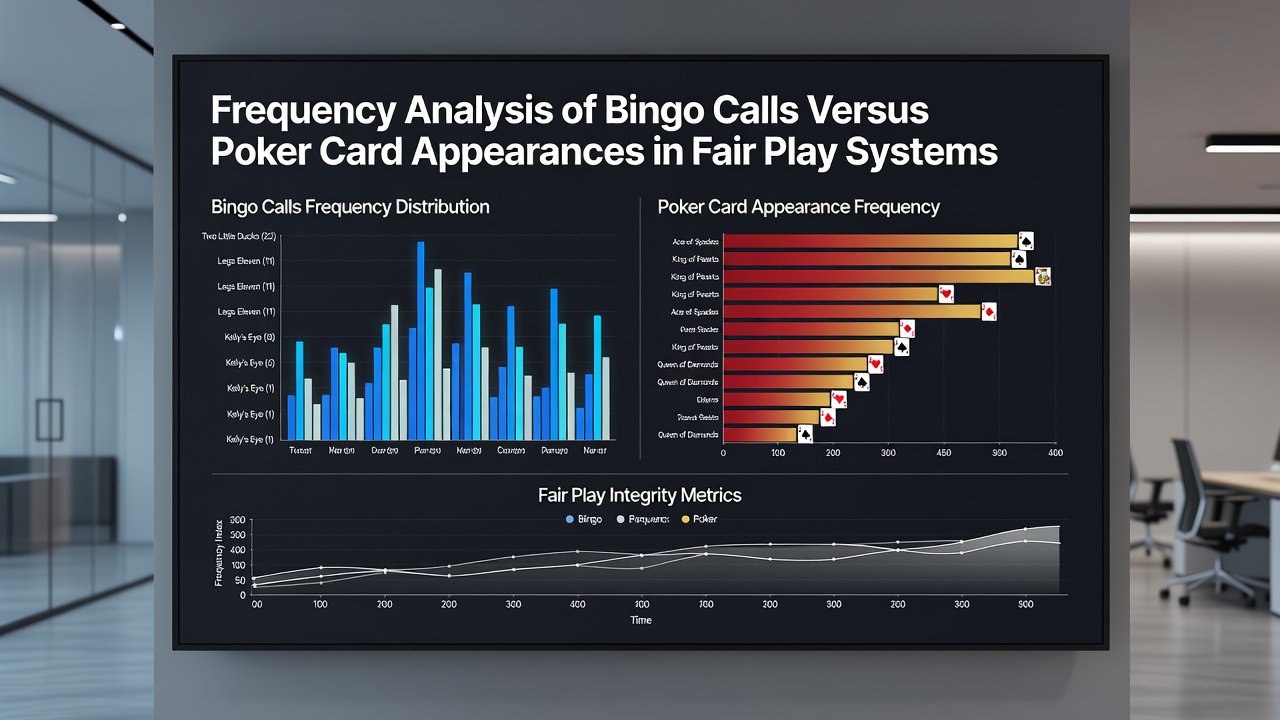
One notable comparison involves tracking the recurrence intervals for high-frequency numbers in bingo against the appearance intervals for specific cards such as aces in poker, and these metrics help illustrate how game design parameters affect observed patterns. Experts at organizations like the International Association of Gaming Regulators have compiled cross-game data sets that highlight the importance of independent testing intervals, which occur quarterly or more frequently depending on jurisdiction requirements.
Verification Processes and Statistical Thresholds
Fair play certification involves ongoing monitoring where operators submit raw draw and shuffle logs for third-party review, and any deviation exceeding predefined chi-square thresholds triggers immediate investigation. Those who manage these systems report that both bingo and poker environments benefit from real-time dashboards that flag anomalies within minutes, allowing rapid intervention while preserving the integrity of ongoing sessions. Australian regulatory bodies and EU oversight entities have adopted similar protocols that emphasize transparency through public summaries of test outcomes.
Additional layers of scrutiny include entropy measurements and correlation analysis that detect subtle dependencies between successive outcomes, and these techniques apply equally to number pools in bingo and card sequences in poker. Published findings from academic partnerships with gaming laboratories continue to refine the models used for threshold setting, ensuring that fair play standards evolve alongside advances in computational verification methods.
Conclusion
Frequency analysis remains an essential component of regulatory compliance for both bingo and poker products operating under fair play frameworks, and the consistent application of statistical testing across jurisdictions supports the maintenance of uniform outcome distributions. Data aggregated through 2026 continues to validate that properly certified systems produce results aligned with mathematical expectations, thereby sustaining player confidence in the underlying randomness mechanisms.