Regulatory Pathways Differ for Mobile Bingo Modules and Poker Client Approvals Worldwide
Greta Zimmermann · Oct 16, 2026
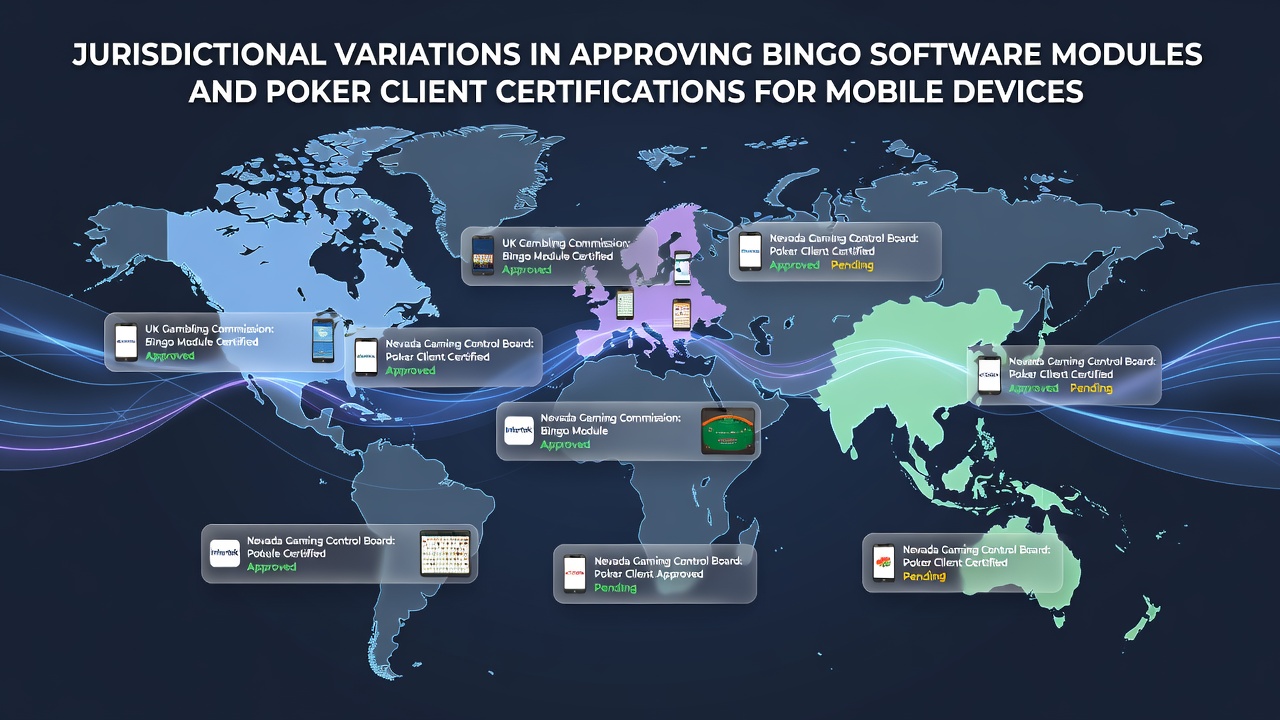
Regulatory Pathways Differ for Mobile Bingo Modules and Poker Client Approvals Worldwide
Approvals for bingo software modules and poker client certifications on mobile devices follow distinct routes depending on the jurisdiction, with each region imposing its own testing protocols, documentation requirements, and technical standards that developers must satisfy before deployment. These variations affect everything from random number generator validation to user interface security features, and they shape how operators prepare submissions for regulatory review.
North American Approaches to Software Certification
State-level bodies in the United States often require separate evaluations for bingo modules and poker clients even when both run on the same mobile platform, since bingo systems frequently fall under charitable gaming statutes while poker clients align with commercial gaming regulations. The New Jersey Division of Gaming Enforcement maintains a structured process that includes third-party laboratory testing for game fairness, device compatibility checks across major operating systems, and ongoing monitoring after initial approval. Pennsylvania's Gaming Control Board applies similar layered reviews yet places additional emphasis on geolocation accuracy and responsible gaming integration within poker applications. Canadian provinces such as Ontario conduct centralized assessments through the Alcohol and Gaming Commission, where mobile bingo modules undergo specific sequence verification tests that differ from the combinatorial analysis required for poker clients.
European and Australian Regulatory Frameworks
European jurisdictions tend to separate certification streams for bingo software and poker clients according to game classification rules, with some countries requiring additional accessibility audits for mobile interfaces that display bingo grids or poker tables. Malta's gaming authority coordinates with independent labs to verify encryption standards and payout reporting mechanisms, while other member states layer national requirements on top of broader EU directives concerning consumer protection. In Australia the Australian Communications and Media Authority oversees aspects of digital platform compliance, and operators must demonstrate that mobile poker clients meet state-specific wagering controls alongside bingo module integrity checks that confirm call sequence randomness. These processes typically involve multiple rounds of documentation review before any software receives clearance for public use.

Technical Standards and Mobile-Specific Requirements
Technical standards across regions consistently address random number generation, data transmission security, and audit trail capabilities, yet the depth of testing varies. Some regulators demand source code reviews for bingo modules while others focus on runtime behavior under simulated network conditions for poker clients. Mobile device certification often includes checks for screen resolution compatibility, touch interface responsiveness, and battery consumption impacts during extended play sessions. Developers preparing submissions in October 2026 will encounter updated guidelines in several jurisdictions that incorporate new expectations around cloud-based backend verification and real-time reporting of game outcomes. Laboratories accredited by multiple authorities help streamline this work by issuing reports that satisfy several regulators at once, although local adaptations remain necessary in most cases.
Submission Timelines and Documentation Practices
Documentation packages differ in scope and format, with some jurisdictions requesting extensive historical performance data for bingo software modules and others prioritizing live trial periods for poker clients on approved mobile devices. Submission timelines range from several weeks in streamlined systems to multiple months where public consultation or additional stakeholder reviews occur. Observers note that operators active across borders frequently maintain parallel compliance teams to manage the distinct procedural demands each authority places on software updates and new feature rollouts.
Conclusion
Jurisdictional variations continue to influence how bingo software modules and poker client certifications reach mobile devices, requiring developers and operators to align their processes with each region's unique combination of technical, legal, and procedural expectations. As regulatory bodies refine their approaches, those involved in software approval stay attentive to evolving standards that govern both game integrity and user experience on portable platforms.